You had a cavity filled expecting your tooth to feel better. But now a sip of cold water, your morning coffee, something sweet, or even biting down makes it sensitive.
Should you be concerned?
Tooth sensitivity after filling is common and usually happens because the tooth’s nerve is temporarily irritated, especially when the original decay was deeper. This happens to 10-30% of people after a dental treatment like a filling.
In many cases, mild discomfort or cold sensitivity is part of the tooth settling after dental treatment and improves with time, but pain that gets stronger, lingers, or worsens should be checked by a dentist.
If you’ve recently had a filling and you’re wondering whether what you feel is normal, understanding the difference can save you some stress and help you know when to get the dentist involved.
As Dr. Shymaa Hashem of 200th St Langley Family Dentistry explains:
“A filling should solve a problem, not leave you wondering about a new one. If sensitivity is getting worse instead of better, your tooth is telling us something—and it’s worth listening.”
In this blog, we’ll explain why sensitivity can happen after a dental filling, how long it may last, ways to keep your tooth comfortable, which signs may point to a problem, possible treatment options for long term relief, insurance coverage, and when it’s time to book a dental appointment.
What Is Tooth Filling?
A dental tooth filling is a treatment used to repair a tooth that’s been damaged by a cavity, has structural damage, or needs a functional adjustment. Your dentist will remove the damaged part of your tooth and then use a filling material to rebuild the tooth surface, restore the tooth’s normal function, while protecting the remaining tooth enamel and structure. Larger fillings might involve more than one multiple tooth surface.
The Canadian Dental Care Plan (CDCP) includes coverage of permanent and temporary fillings as part of restorative dental care services for cavities and broken teeth.
After you’ve had a filling, you may notice that your tooth is a bit sensitive to cold foods, cold drinks, hot foods, sweet foods, or even to pressure when you bite – every tooth is different, and the depth of the cavity and the state of the tooth before treatment can both play a role in how it feels afterwards.
What Causes Tooth Sensitivity After a Filling?
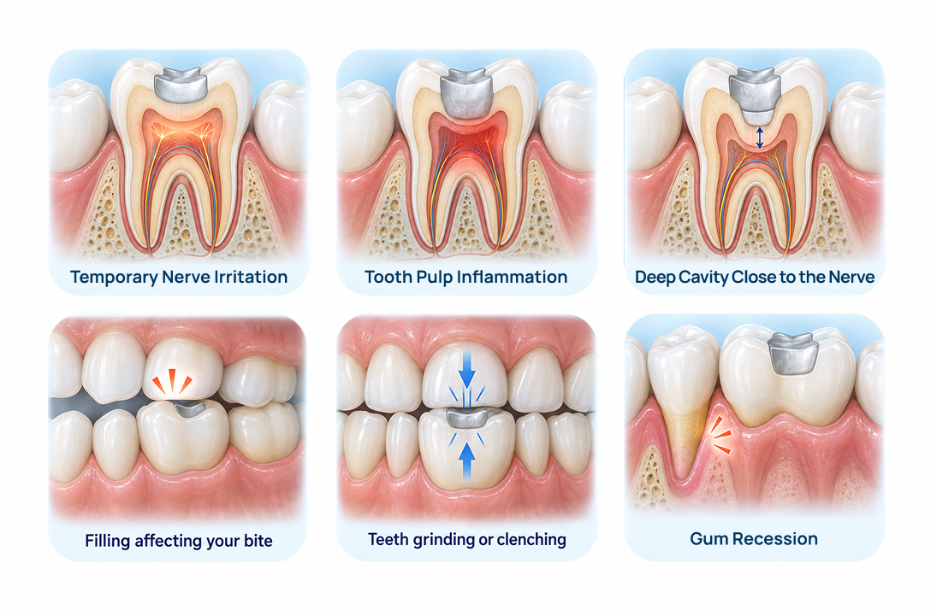
There isn’t one single reason for tooth sensitivity after filling. Here are some common possibilities.
Your Tooth May Be Settling Down
There is living tissue inside your tooth, so dental work can temporarily make the area more sensitive.
This is because either tooth pulp inflammation or the nerve endings get a bit irritable and start responding more strongly to temperature or pressure. Mild sensitivity can happen during the healing process while the tooth nerve settles.
Your Bite May Feel Different
Does the filled tooth seem to touch first when you close your mouth?
Sometimes a restoration can slightly change how your upper and lower teeth meet. If you notice discomfort mainly when chewing, your tooth filling might need an adjustment. Grinding or clenching your teeth can put extra pressure on the filled tooth, worsening your tooth sensitivity.
The Cavity May Have Been Deep
Inside the tooth is the tooth pulp, which contains nerves and blood vessels. Deep decay and deep cavities can extend closer to the sensitive tissue in the inner tooth and the tooth’s nerve.
That doesn’t automatically mean you’ll need more extensive treatment. Your dentist may simply want to monitor how the tooth responds and, when possible, preserve your natural tooth.
Something Else May Be Causing the Sensitivity
Conditions such as gum recession can also expose sensitive areas and contribute to sensitive teeth. Sometimes referred pain can even make discomfort feel as though it’s coming from one tooth when the source is nearby.
If multiple teeth are sensitive rather than only the recently treated tooth, let your dentist know.
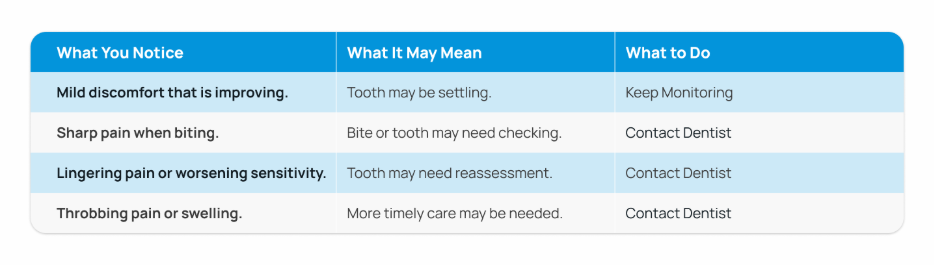
How Long After a Filling Should My Tooth Be Sensitive
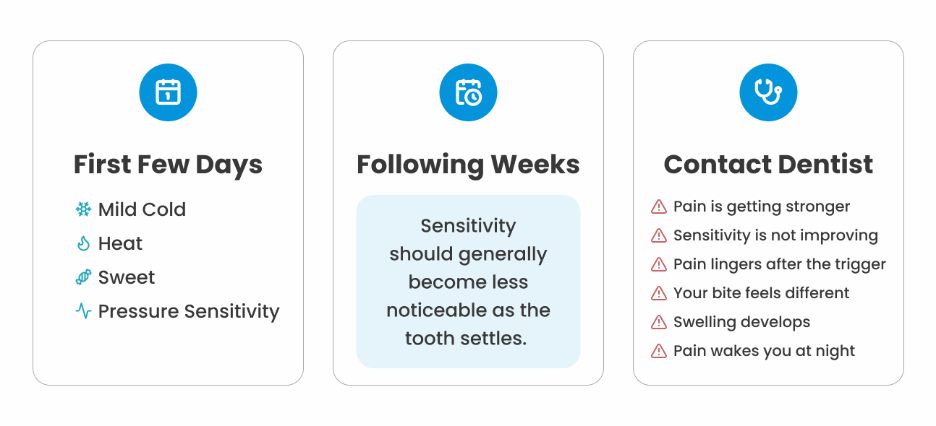
Every tooth is a little different. After a filling, some people notice tooth sensitivity for a few days, while other teeth may take a few weeks to settle, especially after a deeper filling.
You may see general information online referring to two to four weeks, but it’s better not to treat that as a deadline for every tooth. Instead, pay attention to whether your symptoms are improving as the tooth heals.
Contact your dentist if:
- Sensitivity isn’t gradually improving
- You develop significant sharp pain
- Pain persists or becomes stronger
- You have lingering pain without an obvious trigger
- Your bite feels different
- Swelling develops
- Discomfort wakes you at night
- You notice a persistent bad taste along with other symptoms
You don’t need to wait until you have a severely painful tooth or worsening tooth pain.
Tooth Nerve Pain
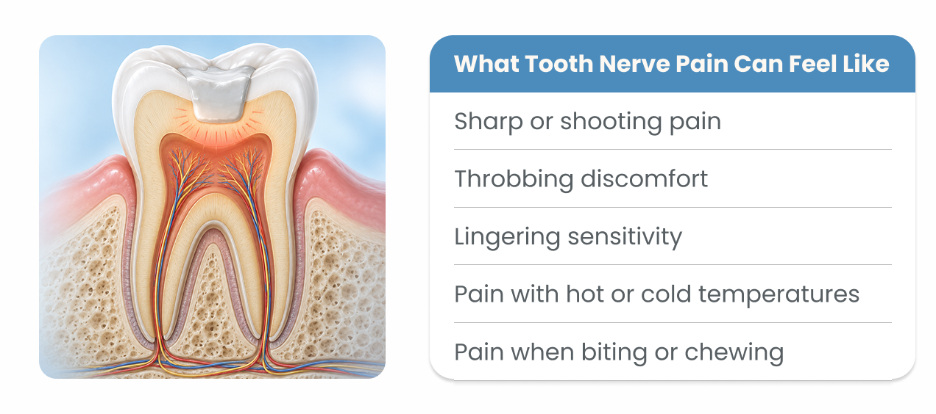
People experiencing tooth nerve pain may describe it as shooting nerve pain, sharp pain, throbbing pain, or discomfort that lingers after the trigger is gone.
This is because your tooth pulp has nerves and blood vessels in the inner tooth. These inner nerve tissues send signals that’s causing you to feel temperature and pressure. So, when tooth decay is deeper, treatment may take place closer to this sensitive area.
Tooth nerve pain does not automatically mean you need a root canal or that you have nerve damage. Sometimes the tooth needs more time. Sometimes your bite needs to be adjusted. In other cases, additional treatment needs to be done.
If the tooth pulp has been affected by decay, infection, or damage, root canal treatment may sometimes be recommended. If you’re wondering which symptoms can point to a deeper problem, read our guide to the signs you may need a root canal and what to expect before and after a root canal.
The Government of Canada considers root canal treatment as an endodontic service under the CDCP so it can be covered.
How to Calm an Irritated Tooth Nerve
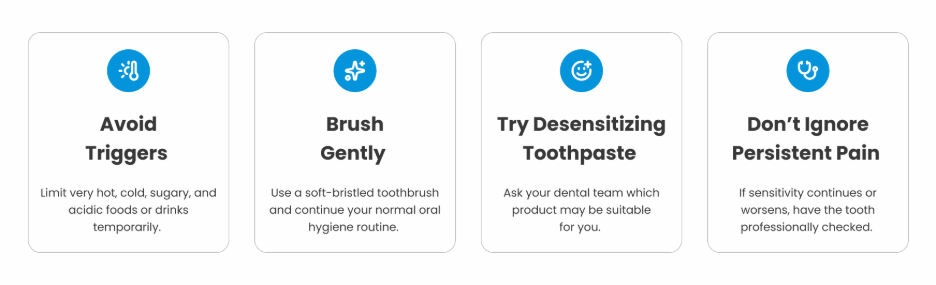
If you’re wondering how to calm an irritated tooth nerve, here are a few simple steps to get relief while the sensitivity settles down.
Avoid Sensitivity Triggers
Avoid hot and cold foods, hot foods, cold beverages, sugary foods, acidic foods, citrus fruits, and other certain foods and beverages if they make the tooth uncomfortable.
If chewing hurts, using the opposite side temporarily may also feel more comfortable.
Brush Gently
Don’t stop cleaning the sensitive tooth. Rinse with warm salt water to reduce inflammation. An over-the-counter pain reliever may help manage discomfort. Place a cold compress on the outside of the face near the area to numb the nerve and reduce swelling. Instead, brush gently with a soft bristled toothbrush and continue cleaning between your teeth.
Good daily oral hygiene and regular preventive dental care can also help prevent sensitivity associated with other dental concerns.
Use Desensitizing Toothpaste
Desensitizing toothpaste may help some people with sensitive teeth. Depending on its ingredients, it may work by protecting sensitive areas or helping block nerve signals associated with sensitivity.
Ask your dental team which product may be suitable for you.
Don’t Keep Masking Persistent Pain
Home measures may provide temporary relief or short-term pain relief, but they don’t address the underlying cause of why the tooth hurts.
If you’re repeatedly trying to relieve pain and the sensitivity isn’t improving, let your dentist take a look. Some teeth only need monitoring or a simple adjustment, while others may need professional treatments or more extensive treatment.
Are Tooth Fillings Covered by Insurance
Tooth fillings can be covered by your insurance, depending on your individual dental plan. Private insurance can vary in reimbursement amounts, deductibles, annual maximums, and which treatments are covered.
Eligible Canadians may also receive help through the Canadian Dental Care Plan (CDCP). The Government of Canada lists permanent and temporary fillings among restorative services that may be covered by the CDCP. How much is covered depends on your circumstances and CDCP-established fees.
Cost can affect whether people seek dental care. Statistics Canada reported that 24% of Canadians aged 12 and older avoided visiting an oral health professional because of cost. Among people without dental insurance, that rose to 45%.
We accept CDCP and can help you understand eligible claims. You can learn more about CDCP and dental financing in Langley with us as well.
When Should You See a Dentist About Tooth Sensitivity After Filling
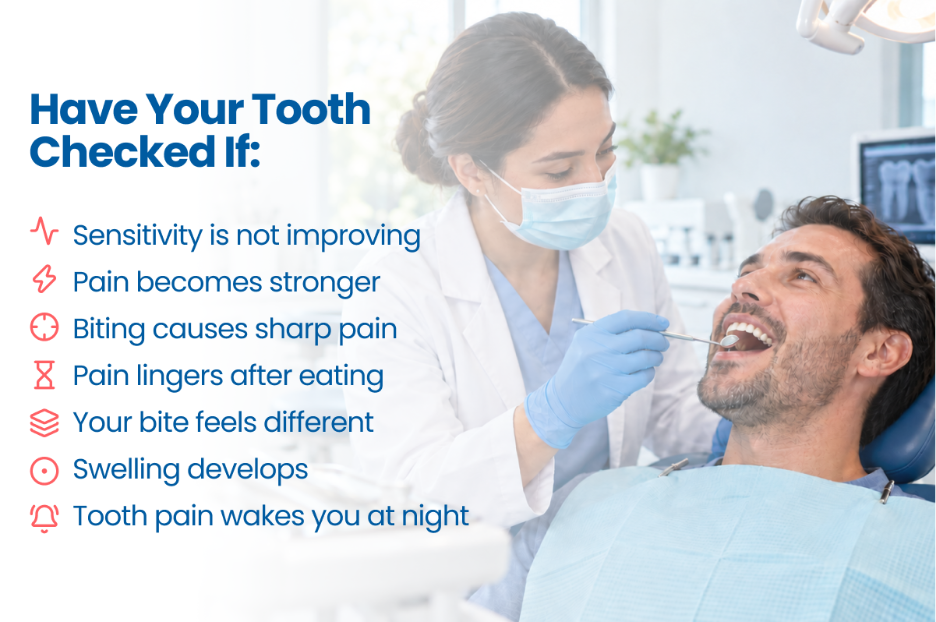
If something doesn’t feel right, it’s okay to see a dentist and have us take a look.
Consider having the affected tooth checked if:
- sensitivity isn’t improving
- pain persists or becomes stronger
- biting causes sharp pain
- you have lingering pain
- your bite feels different
- swelling develops
- tooth pain wakes you at night
That doesn’t mean every sensitive tooth to foods and drinks needs urgent dental care. But ongoing tooth pain or nerve pain is worth checking rather than repeatedly managing it at home for temporary relief without understanding the underlying cause.
If the sensitivity isn’t settling or the pain is getting worse, it’s best to visit a trusted dental clinic in Langley to have the tooth checked, find out what’s causing the discomfort and understand what treatment, if any, you may need.
Common Questions About Tooth Sensitivity After Filling
Is It Normal to Feel Tooth Sensitivity After Filling?
Yes. Mild tooth sensitivity after a filling can be normal because the tooth nerve is temporarily irritated after treatment – you’ll feel it more especially when the tooth reacts to cold, heat, sweets, or pressure.
What Causes Tooth Sensitivity After a Filling?
Tooth sensitivity after a filling can be caused by different reasons – like temporary nerve irritation, tooth pulp inflammation, a deep cavity, a change in your bite, or another dental issue like gum recession.
How Long Can Tooth Be Sensitive After Filling?
Tooth sensitivity after a filling may last from a few days to a few weeks, depending on how deep the original cavity was.
How to Treat Tooth Sensitivity After Filling?
To help treat tooth sensitivity after a filling, you should avoid foods and drinks that trigger discomfort and brush gently with a soft-bristled toothbrush using a desensitizing toothpaste. If the sensitivity persists or gets worse, have it checked to identify the underlying cause and recommend the right treatment.
Still Experiencing Tooth Sensitivity After a Filling?
A little sensitivity after a filling doesn’t always mean something is wrong; sometimes your tooth just needs time to settle. But if the sensitivity isn’t getting better, keeps coming back, or is becoming more painful, it’s worth having your dentist take a look.
When you come to us, we check the infected tooth carefully, listen to what you’ve been feeling, and explain what may be causing the sensitivity and what you can do next. Our family-friendly dental clinic in Langley has been caring for the community since 2006, with personalized and comprehensive dental care for patients of all ages. If your tooth still doesn’t feel right, book an appointment and let us take a look.