Reviewed by Dr. Shymaa Hashem
You brushed this morning. You might have even swished some mouthwash before grabbing your keys. And still, by mid-morning, you’re doing that quick breath check behind your hand. It’s not a great feeling when you’ve got a meeting coming up, or later when your kids climb in for a goodnight hug.
For what it’s worth, about 1 in 3 people deal with bad breath, according to a large review of studies. Scrubbing harder rarely helps.
When people get bad breath after brushing, the smell is usually coming from places a toothbrush doesn’t really reach. The top of your tongue is a big one. So are the tight gaps between your teeth and the line where your gums meet your teeth. A dry mouth or early gum disease can add to it too.
As Dr. Shymaa Hashem, a dentist at our Langley clinic, explains:
“If bad breath keeps coming back, don’t just cover it up. Find out what’s causing it. Treating the cause is the way to get fresher breath.”
Keep reading for why your breath may still smell after brushing, plus other reasons for bad breath and what to do about them at home.
In this guide:
- Why does my breath always smell?
- What are reasons for bad breath?
- How to fix bad breath after brushing
- Common questions
Why Does My Breath Always Smell?
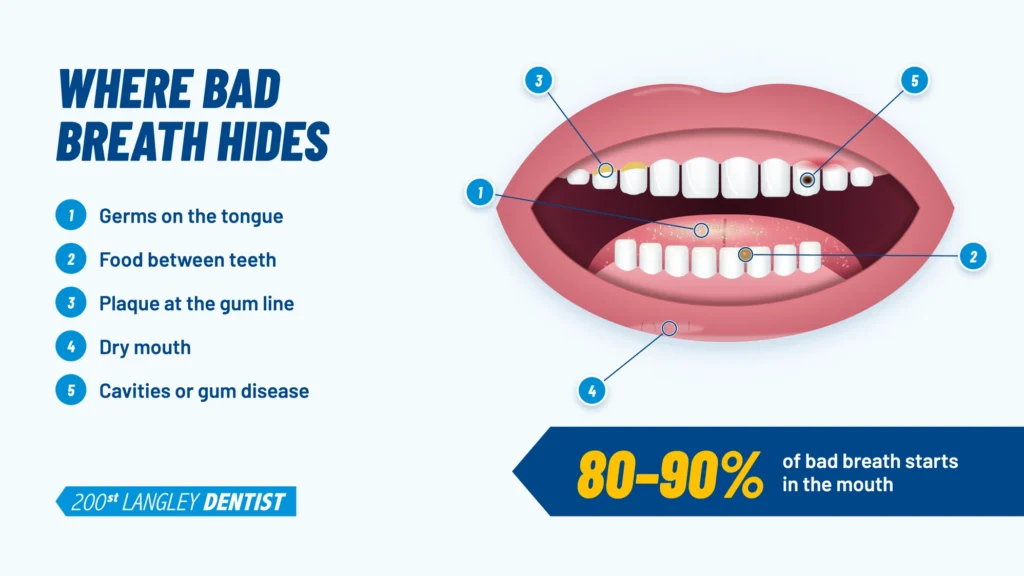
Ask a dentist “why does my breath always smell?” and you’ll probably hear that the answer is in your mouth. Researchers who pulled together years of studies found that 80 to 90% of cases start there, which means it’s usually something you can work on, with a little help from us. Brushing takes care of the fronts and backs of your teeth. Where it falls short is everywhere else.
- Germs on your tongue. Your tongue isn’t smooth. It’s covered in tiny bumps, and germs and bits of food settle in between them. If your tongue gets skipped when you brush, those germs get to stay put, and they give off gases with a rotten-egg smell.
- Food stuck between your teeth. Bits of lunch can hang around in the gaps between your teeth for hours (sometimes longer) because your brush simply can’t get in there. Once that food starts to break down, you’ll notice it. This is the big reason we keep nudging patients to floss.
- Plaque along the gum line. That fuzzy feeling on your teeth at the end of a long day? That’s plaque, which is basically a soft layer of germs. If it hangs around the gum line, your gums can get puffy and sore, and you might see a little pink in the sink when you floss. Gums like that rarely smell great.
- Dry mouth. Saliva keeps washing your mouth all day without you noticing, and germs have an easier time when there’s not enough of it. Morning breath happens for exactly this reason. Overnight your mouth makes much less saliva, so you wake up with stale breath even if you brushed before bed. Certain medications can leave your mouth dry during the day as well. If that’s you, let us know at your next visit.
- Cavities or gum disease. Then there are people who do everything right, brushing and flossing every day, and the smell still sticks around. When that happens, there may be a cavity or some gum disease that isn’t easy to spot on your own, and a checkup is how you find out.
What Are Reasons for Bad Breath?
Maybe you’re thinking, “Okay, but what are reasons for bad breath if my brushing and flossing are already pretty good?” The answer could be on your plate, in a cigarette or vape, in your medicine cabinet, or tied to your general health.
Garlic and onions are the classic example. After you eat them, compounds from the food get into your bloodstream and you breathe them out through your lungs for a while. Brush all you want after a plate of garlic bread; you might still catch a whiff later on. Give it time and your body clears it out on its own.
Smoking and vaping leave their own smell behind, and they also dry out your mouth, which (as we mentioned above) gives odour-causing germs more room to grow.
Every now and then, the source isn’t your mouth at all. Somewhere around 10 to 20% of cases have nothing to do with your teeth or gums. Those cases can come from:
- Postnasal drip: when a cold or allergies leave mucus running down the back of your throat
- Sinus infections: when the spaces behind your nose and cheeks get swollen and trap mucus and germs
- Tonsil stones: hard little bits that build up in the creases of your tonsils (and yes, they smell)
- Acid reflux: stomach acid that comes back up into your throat
If we take a look and your mouth is healthy, we’ll tell you that straight, and we may point you to your family doctor to check on these other causes.
Common Reasons for Bad Breath at a Glance
| Cause | Where it starts | What may help |
|---|---|---|
| Germs on the tongue | Back of the tongue | Daily tongue cleaning |
| Food between teeth | Gaps between teeth | Flossing once a day |
| Plaque on the gums | Along the gum line | Regular dental cleanings |
| Dry mouth or low saliva | Whole mouth, often at night | Drinking more water |
| Cavities (tooth decay) | Inside a damaged tooth | A dental checkup |
| Garlic and onions | Blood, then the lungs | Time for it to fade |
| Smoking or vaping | Mouth and the lungs | Cutting back or quitting |
| Postnasal drip | Back of the throat | A family doctor visit |
| Sinus infection | Spaces behind the nose | A family doctor visit |
| Small tonsil stones | Pockets in the tonsils | A doctor visit if ongoing |
| Stomach acid reflux | Stomach and the throat | A family doctor visit |
How to Fix Bad Breath After Brushing Teeth
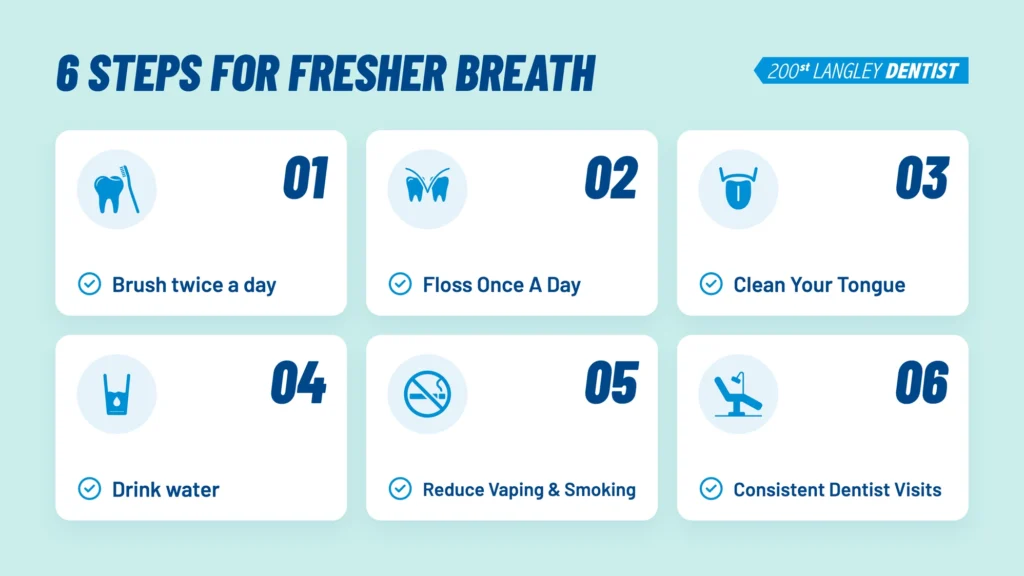
For a lot of people, bad breath after brushing gets better with a few small changes, and the biggest one is cleaning your whole mouth instead of only your teeth. If you were in our chair, these are the habits we’d go over with you:
- Brush twice a day. Two minutes each time, with fluoride toothpaste. It feels longer than you’d think, so a phone timer helps. Point the bristles a little toward your gums to pick up the plaque that collects along the gum line.
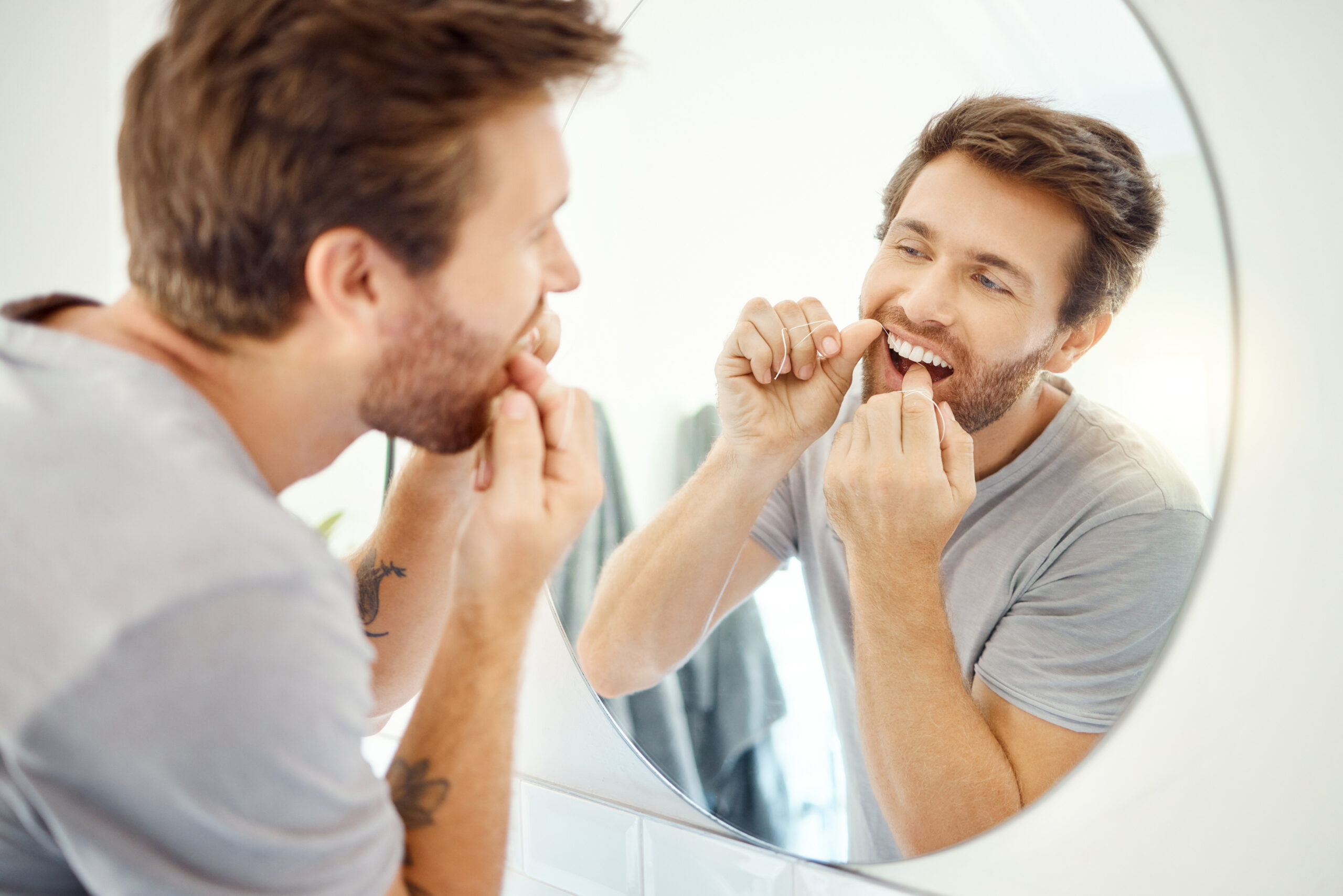
- Floss once a day. That’s the only way to get at the spaces your toothbrush misses. Plenty of people find string floss fiddly, and that’s fine. If that’s you, try floss picks or a water flosser instead.
- Clean your tongue. Brush it, or use a tongue scraper, going from back to front once a day. It takes maybe ten seconds and clears off a lot of the germs that cause bad breath.
- Drink plenty of water. A water bottle on your desk or in the car makes this easy. Sipping through the day, and especially after meals or coffee, keeps your mouth from drying out and washes food away.
- Cut back on smoking or vaping. Both leave a smell behind and dry your mouth out, so any cutback counts.
- Keep up with dental visits. Tartar is plaque that has hardened, and once it’s there, a toothbrush won’t move it. Our hygienists clean it off, and at regular checkups we can catch small problems before they grow.
What about gum, mints and mouthwash? They’re handy before a meeting or a date. Sugar-free gum gets your saliva going, and an alcohol-free mouthwash may knock back some germs. They’re a cover-up, though, and a short one. If bad breath keeps coming back, they won’t fix what’s causing it.
Brushing with kids? Our guide to preventing cavities in children has easy tips for the whole family.
Breath still not fresh? Our Langley team is happy to take a look and walk you through what we find.
Common Questions About Bad Breath After Brushing
Can Kids Get Bad Breath After Brushing?
Yep, it happens to kids too. With little ones it’s usually germs on the tongue, food wedged between teeth, or sleeping with their mouth open, which dries everything out overnight. Teach them to give their tongue a quick brush, and help with flossing until they can manage on their own. If it hangs around, our children’s dentistry team can check it out.
Why Do I Still Have Bad Breath After Brushing My Teeth?
Usually because your teeth aren’t where the smell is coming from. It tends to come from germs on your tongue, food between your teeth, or plaque along your gums. Dry mouth, cavities and gum disease can play a part as well.
What If Bad Breath Doesn’t Go Away After Brushing and Flossing?
Then it’s time to come see us. We’ll look for gum disease, cavities and tartar buildup. And if your mouth checks out fine, your family doctor may be the next person to talk to about other causes.
How Can I Tell If I Have Bad Breath?
One trick is to lick the inside of your wrist, wait a few seconds for it to dry, and sniff. You could also ask someone close to you who’ll be honest.
Still Have Bad Breath After Brushing? Get Help in Langley
Everybody has an off-breath day now and then. When it’s happening most days, though, you shouldn’t have to keep reaching for gum and mints to get through the day.
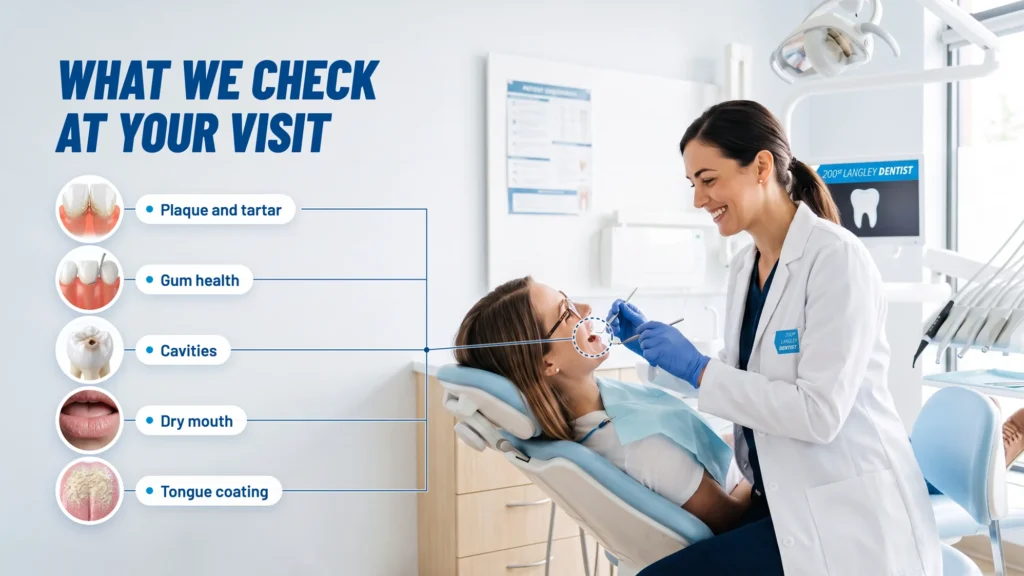
At your visit we’ll check your teeth, gums and tongue, tell you what we see in plain language, and go over your options with you, without any pressure.
Our family-friendly dental clinic in Langley has cared for local families since 2006. We offer gentle, personalized care for kids, adults and seniors. We can also help with insurance and CDCP claims, and we offer dental financing options.
If dental visits make you nervous, here’s how we help calm dental anxiety.
If your bad breath isn’t getting better, book an appointment or call us at (604) 532-4000, and we’ll help you find the cause.